
Porównania czasów

Past Perfect Simple vs Continuous

Ukończony rezultat kontra długi proces przed innym momentem w przeszłości, pokazane przez historię Mai przed sprawdzianem.

Historia Mai

Co było gotowe, a co trwało wcześniej?

Rysunkowa Maja uczy się długo wieczorem przed sprawdzianem
Krok 1

Długi proces: Past Perfect Continuous

Maja uczyła się długo wieczorem przed sprawdzianem. Ważne jest trwanie i wysiłek przed późniejszym momentem.

Maja had been studying for three hours before she went to bed.
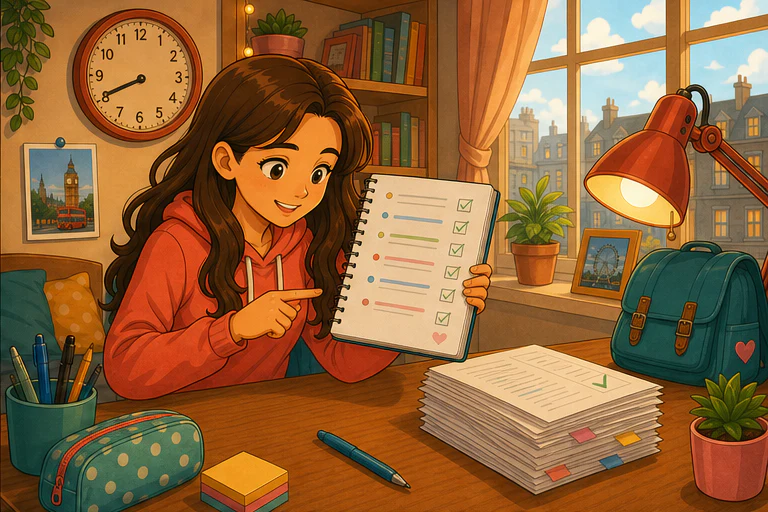
Rysunkowa Maja pokazuje gotową notatkę powtórkową
Krok 2

Gotowy rezultat: Past Perfect Simple

Rano Maja miała gotową powtórkę. Tu najważniejsze jest, że coś było zakończone przed sprawdzianem.

Maja had finished her revision summary before the test started.
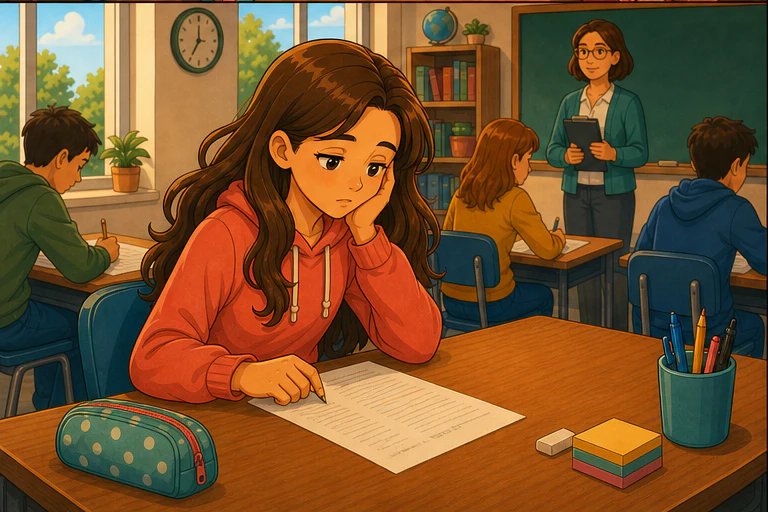
Rysunkowa Maja jest zmęczona w klasie przed sprawdzianem
Krok 3

Ślad w przeszłości: Continuous

W klasie Maja była zmęczona, bo wcześniej długo się uczyła. Skutek był widoczny w tamtym momencie w przeszłości.

Maja was tired because she had been studying all evening.
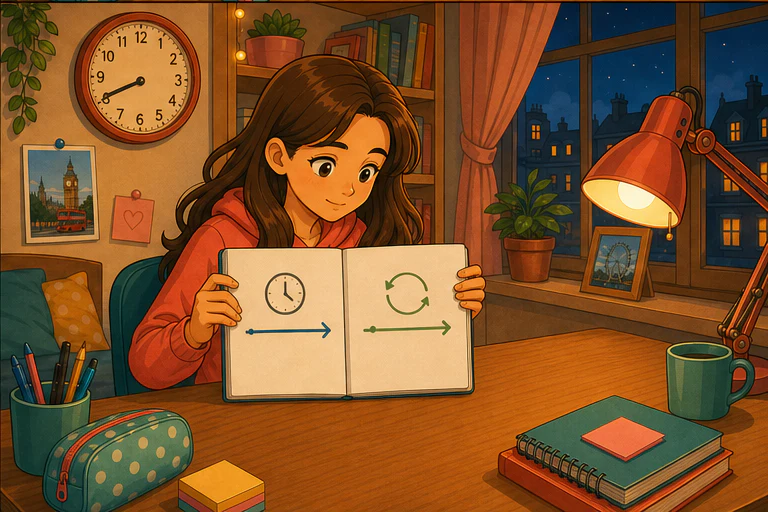
Rysunkowa Maja porównuje gotowy rezultat i długi proces na osi czasu
Krok 4

Wybór czasu

Jeśli mówimy, co było gotowe, wybieramy Simple. Jeśli mówimy, jak długo coś trwało, wybieramy Continuous.

She had revised five topics, but she had been studying for hours.

Konstrukcje

Dwa wzory obok siebie

Past Perfect Simple

Wynik przed momentem w przeszłości

Osoba + had + III forma czasownika

Maja had finished her summary before the test.

She had revised five topics.

Past Perfect Continuous

Proces przed momentem w przeszłości

Osoba + had been + czasownik + -ing

Maja had been studying all evening.

She had been writing notes for three hours.

Pytania

Wynik czy czas trwania?

how many = Simple how long = Continuous

How many topics had Maja revised?

How long had Maja been studying?

Past Perfect Simple

Kiedy wybieramy Simple?

Gotowy rezultat

Najważniejsze jest to, że czynność była zakończona przed innym momentem.

Maja had finished her summary before the test started.

Ilość

Mówimy, ile rzeczy było zrobionych.

She had revised five topics.

Kolejność wydarzeń

Jedna czynność była gotowa, zanim wydarzyła się druga.

After she had packed her notes, she left for school.

Czasowniki stanu

Z czasownikami stanu zwykle wybieramy Simple.

Maja had known the rule before the lesson.

Past Perfect Continuous

Kiedy wybieramy Continuous?

Czas trwania

Najważniejsze jest, jak długo czynność trwała wcześniej.

Maja had been studying for three hours.

Proces

Interesuje nas sama czynność, nie gotowy wynik.

She had been writing notes all evening.

Widoczny ślad w przeszłości

W tamtym momencie było widać efekt wcześniejszego wysiłku.

Maja was tired because she had been studying.

Czynność do punktu w przeszłości

Proces trwał aż do konkretnej chwili albo tuż przed nią.

By the time the test began, she had been revising for hours.

Decyzja

Jak szybko wybrać dobry czas?

Wybierz Simple, jeśli...

Mówisz o ukończeniu, wyniku, liczbie albo stanie przed innym momentem w przeszłości.

Maja had finished the summary.

Wybierz Continuous, jeśli...

Mówisz o procesie, czasie trwania, wysiłku albo śladzie widocznym wtedy w przeszłości.

Maja had been studying all evening.

how many -> Simple how long -> Continuous already -> Simple by the time -> oba, zależnie od sensu for -> często Continuous since -> często Continuous all evening -> Continuous because she was tired -> często Continuous

Uwaga

Typowe błędy

Błąd

Maja had been finished her summary before the test.

Poprawnie

Maja had finished her summary before the test.

Błąd

She was tired because she had studied all evening.

Poprawnie

She was tired because she had been studying all evening.

Błąd

How many topics had she been revising?

Poprawnie

How many topics had she revised?

Błąd

Maja had been known the rule before the test.

Poprawnie

Maja had known the rule before the test.

Praktyka

Ćwiczenia do Past Perfect Simple vs Continuous

Kolejność

Co dalej po tym porównaniu?