
Po zdaniu twierdzącym dajemy przeczący tag
Maja widzi piękny dzień i oczekuje potwierdzenia. Zdanie główne jest twierdzące, więc końcówka jest przecząca.
It's a sunny day, isn't it?
You like this class, don't you?

Zapisz się
Krótkie pytanie na końcu
Maja zauważa, że po angielsku często dodajemy krótkie pytanie na końcu zdania: isn't it?, do you?, can't she?. To działa trochę jak polskie prawda?, ale wymaga właściwego operatora i zaimka.
Historia Mai
Maja widzi piękny dzień i oczekuje potwierdzenia. Zdanie główne jest twierdzące, więc końcówka jest przecząca.
It's a sunny day, isn't it?
You like this class, don't you?
Kiedy Maja mówi, że ktoś nie jest w klasie, końcówka wraca do formy twierdzącej. To równoważy zdanie.
Adam isn't here today, is he?
They don't know the answer, do they?

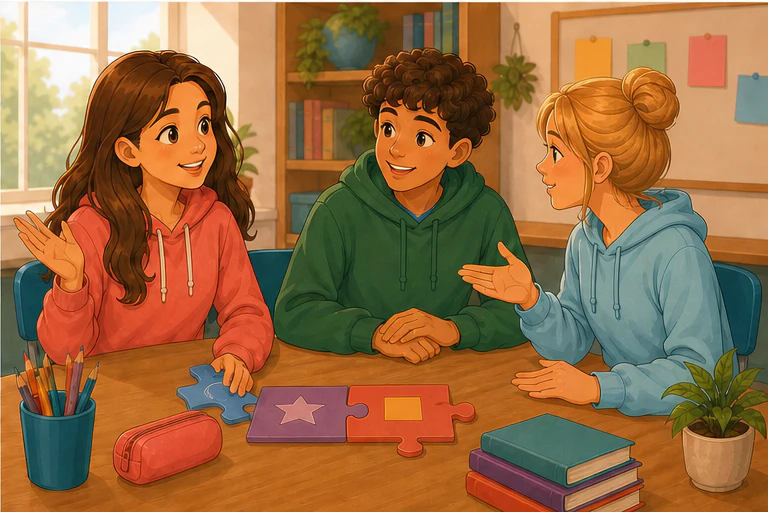
Maja dopasowuje elementy jak puzzle: is do isn't, can do can't, a w Present Simple używa do albo does.
She can swim, can't she?
He plays well, doesn't he?
Gdy Maja jest prawie pewna, głos zwykle opada. Gdy naprawdę nie wie i chce odpowiedzi, głos idzie w górę.
You finished the task, didn't you?
She isn't coming, is she?

Szybka decyzja
twierdzenie = tag przeczący
She is ready, isn't she?
You can help, can't you?
is / do / did / can / have + zaimek
They went home, didn't they?
She has finished, hasn't she?
Maja = she, the lesson = it
Maja is late, isn't she?
The lesson was easy, wasn't it?
Budowa
Używamy po zdaniu twierdzącym.
You are ready, aren't you?
She likes tea, doesn't she?
They have left, haven't they?
Używamy po zdaniu przeczącym.
You aren't ready, are you?
She doesn't like tea, does she?
They haven't left, have they?
Twierdzenie + przeczenie
osoba / rzecz + is + ..., isn't + zaimek?
Maja is ready, isn't she?
The room was quiet, wasn't it?
osoba + czasownik + ..., don't / doesn't + zaimek?
You like pizza, don't you?
He plays football, doesn't he?
osoba + II forma + ..., didn't + zaimek?
They went home, didn't they?
Maja finished early, didn't she?
Przeczenie + twierdzenie
osoba + isn't + ..., is + zaimek?
Adam isn't here, is he?
They weren't late, were they?
osoba + don't / doesn't + czasownik + ..., do / does?
You don't know, do you?
She doesn't agree, does she?
osoba + can't / won't / shouldn't + czasownik + ..., can / will / should?
They can't come, can they?
You shouldn't worry, should you?
Operator
Powtarzamy odpowiednią formę be.
She is kind, isn't she?
They were tired, weren't they?
Gdy w zdaniu nie widać operatora, używamy do, does albo did.
He likes music, doesn't he?
You saw it, didn't you?
Powtarzamy modal: can, should, will, would, must.
Maja can help, can't she?
They should study, shouldn't they?
Przy czasach perfect używamy have, has albo had.
She has finished, hasn't she?
They had left, hadn't they?
Intonacja
Mówisz tak, gdy prawie znasz odpowiedź i tylko oczekujesz potwierdzenia.
It's your book, isn't it?
Znaczenie: Jestem prawie pewna, potwierdź.
Mówisz tak, gdy naprawdę nie jesteś pewien i chcesz odpowiedzi.
She isn't coming, is she?
Znaczenie: Nie wiem, powiedz mi.
Wyjątki
Najczęstsza forma taga to aren't I?
I am late, aren't I?
Po let's używamy shall we?
Let's start, shall we?
Przy poleceniach często pojawia się will you? albo can you?
Close the door, will you?
W tagu zostaje there.
There is a test today, isn't there?
Typowe błędy
She is nice, isn't it?
PoprawnieShe is nice, isn't she?
You like pizza, do you?
PoprawnieYou like pizza, don't you?
He doesn't play, doesn't he?
PoprawnieHe doesn't play, does he?
I am late, amn't I?
PoprawnieI am late, aren't I?
Let's go, don't we?
PoprawnieLet's go, shall we?
She has finished, doesn't she?
PoprawnieShe has finished, hasn't she?
Praktyka
Propozycja kolejności